

Insurance agency web design
Websites for insurance companies that turn visitors into quotes.
Carriers, MGAs, brokerages, and the insurtech platforms behind them come to Takeoff when the insurance website stops matching the business. We rebuild it around how buyers shop coverage, with a design built to generate leads rather than list products.







The pattern
Where web design for insurance usually goes wrong
Most of these sites were built once, for compliance sign-off, not for how people actually shop for coverage today.
What brings insurance teams to us
Competitors with less insurance expertise winning the organic traffic and AI mentions
Coverage listed as a product menu, with nothing explaining who each one is for
A quote or contact path buried three clicks from where buyers land
An insurance website that breaks on a phone, where most of the traffic now lands


What we do about it
Reporting tied to quote requests and lead generation, not website visits
A redesign built around how your target audience actually shops coverage
Responsive design that holds up on every screen, tested before launch
SEO and AEO work so the insurance business shows up where buyers start
%20(1).avif)

I've been through 12 website launches in my career and I want to give some well-deserved credit to Takeoff for delivering the best experience I've had to date.

Kristine Champion · SVP Marketing, AuthenticID

Overview
Insurance website design for the companies modernizing insurance
Insurance is being rebuilt from the inside, and the companies doing it are selling into carriers, brokers and MGAs who move carefully and buy by committee.
That means the site has to do more than describe the product. It has to prove the thing underwriting, IT, compliance and procurement each need proven before anyone books a demo. We look at what those buyers search, what they need to see before they'll take a meeting, and where the current site loses them.
We handle strategy, design, development and SEO on one team, and hand over a CMS your team can update without a developer.
Who it's for

Insurtech platforms selling to carriers, where the buyer is technical and the sale is long
Brokerages where insurance agents send prospects to a site that undercuts them
Carriers and MGAs whose insurance agency websites were built for a different product line
Insurance brands whose digital presence is invisible in the search and AI results where buyers compare
Services
How we help insurance companies
Website redesign is where most insurance engagements start, and it's the foundation the rest of your digital marketing sits on.

Website Redesign
A custom insurance website rebuilt around how buyers actually shop coverage, built to convert over a long, multi-stakeholder decision.

AI Search Optimization
Get cited when buyers ask an AI assistant who to call, through the third-party sources those systems trust.

SEO
Rank for the coverage and location terms your buyers search, measured in qualified leads rather than traffic.
Branding & Design
Brand strategy and a new brand identity, applied across your website, decks, campaigns, and collateral.
Website Maintenance & Development
A retainer instead of a full redesign. We keep the site secure and fast, then improve it in pieces and build what marketing needs next, on WordPress, Drupal, Webflow, HubSpot, or Craft.
Case studies
Insurance results
This service in action.
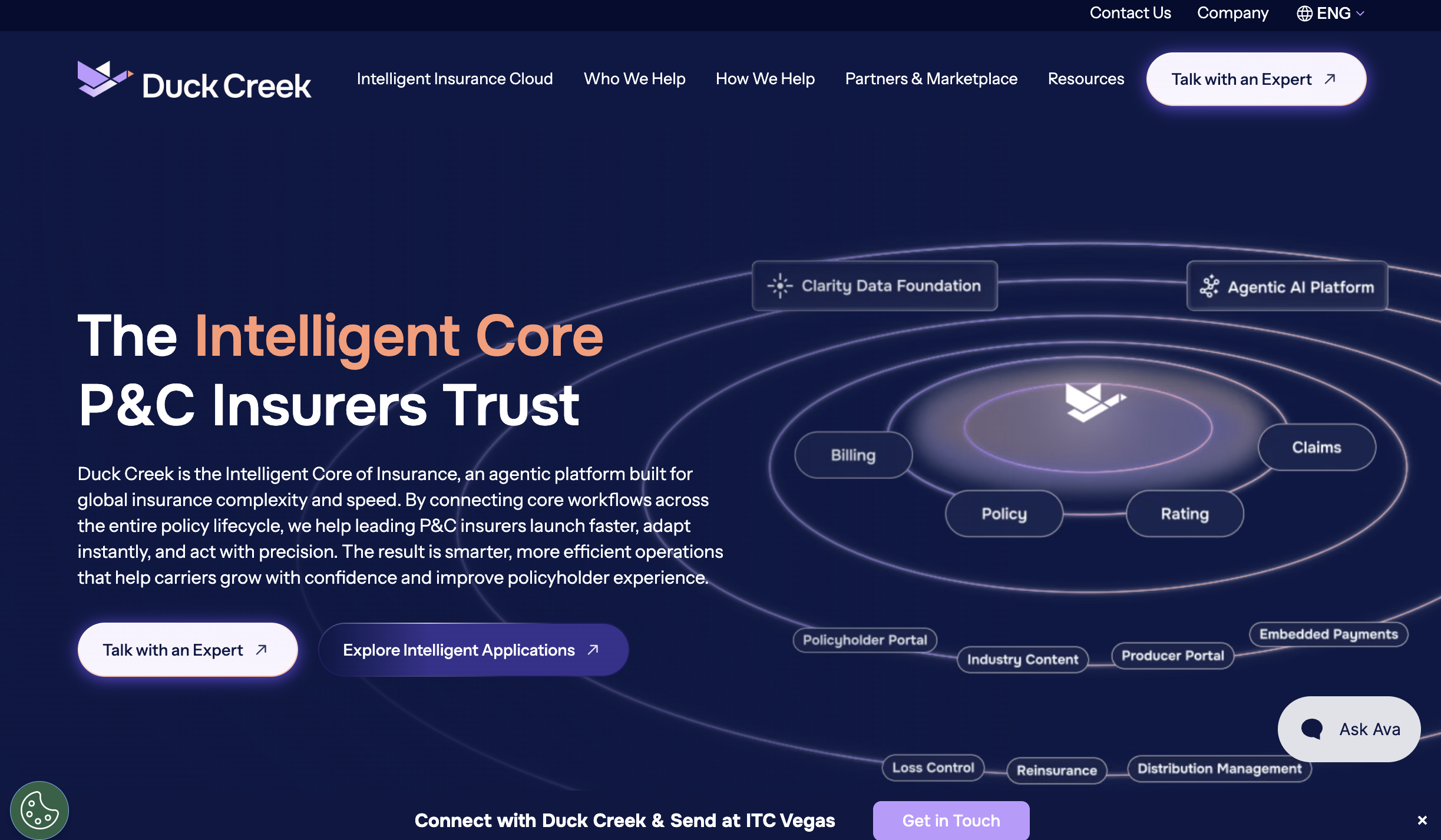
P&C Insurance Software
114.63%
LLM-sourced sessions post-launch
23.37%
Website traffic increase post-launch
48.3%
Target keywords on page 1 within 45 days of launch
Core Deliverables
What an insurance website redesign includes
The concrete deliverables, start to launch. CMS-agnostic by design
Strategy & discovery
Stakeholder workshops, persona research, competitive analysis, KPI definition and a full site audit. You leave with one metric everyone has agreed to.
UX design
Information architecture, user journey mapping, unlimited wireframe iterations and CRO work.

Visual design
Three homepage concepts from three designers, then responsive design across every breakpoint. Designed with real copy rather than lorem ipsum.
Development & CMS
A modular CMS on Webflow, HubSpot, WordPress, Craft or Drupal, with content migration, training and CRM integration. We are a Webflow Certified Partner, and you own everything from day one.

Migration & SEO
A 55-point redirect map, keyword research and an SEO roadmap, so organic traffic survives the launch and grows after it.

Launch & measurement
Pre-launch audit, launch support, 30-day monitoring, and reporting tied to qualified pipeline rather than sessions.
Want an insurance website that generates leads? Let's talk.
Results
Proof from B2B brands
Measured across organic visibility, qualified inquiries, and pipeline.
+250%
Demo requests from search · ServiceTrade
+226.7%
Contact form submissions · Glenmede
+57.1%
SEO-sourced demo requests · FiscalNote
+637%
AI search sessions · StreetLight
Industries
Other industries we serve
Every industry buys differently. Explore the work we do in others.

Frequently Asked Questions
What are the essential core features of insurance web design?
A standard project runs about 14 weeks.
What makes Takeoff different from other web design agencies for insurance?
We've done this work for Duck Creek and bolttech, and you own the files and the code from day one.
What should you look for when choosing an insurance web design company?
And ask who writes the copy, because insurance content is where generic agencies get exposed.
Do you work with independent agencies, or only carriers and insurtech?
The scope scales down, and a retainer is often the better starting point for a smaller agency.
Do we have to do a full redesign to work with you?
It fits sites that are structurally fine and mainly need conversion work and search visibility.
Will a redesign put our organic traffic at risk?
Glenmede came out of their project with a 108.59% increase in non-branded traffic.
How long does an insurance website redesign take?
Multi-line carriers with several products and regions sit at the top of the range.
What does insurance agency website design cost?
Retainers are priced separately if you'd rather spread the work out.
Can you improve our visibility when buyers ask AI assistants who to call?
Glenmede's LLM-sourced contact requests went up 828.57%, and StreetLight's AI search sessions went up 637%.
How do you handle licensing, disclosures, and carrier appointments?
That also means state-specific pages and agent listings can be generated instead of built by hand.