

Life Science Web Design Company
Website development for life science companies with complex science and several buyers.
Takeoff is a life science website design company for CROs, diagnostics, medtech and biotech brands. We turn dense science into a site that sponsors, clinicians and lab teams can each find their way through.








The Problem
Your science is clear to your team and hard to follow on your website.
Your scientists can explain the mechanism in one sentence. The website takes six scrolls and three PDFs to say the same thing.
What brings life sciences teams to us
Pages written for regulators and investors that the people evaluating you can't use
Sponsors, sites and clinicians all landing on one page that speaks to none of them
Several brands or service lines from acquisitions, with no clear path to each
A CMS that needs a developer every time a new paper or result comes out


What we do about it
Navigation split by audience from the first click
Dedicated pages for each therapeutic area, service line and specialty
One design system that holds several brands under a single company story
Resource templates your team can publish to without a developer


“I've been through 12 website launches in my career and I want to give some well-deserved credit to Takeoff for delivering the best experience I've had to date.”

Kristine Champion · SVP Marketing, AuthenticID

How It Works
A life science web design company that starts with who's reading.
Life sciences websites serve more audiences than most. For Lexitas, an ophthalmology CRO, sponsors needed proof of expertise and clinical sites needed to know how to join the network. We split the navigation into For Sponsors and For Sites from the first click.
Catalyst Clinical Research had a different problem. It had grown into two specialist brands, and we designed one site with a front door for each and a corporate homepage tying them together.
So our process starts with stakeholder workshops and persona research, before any design. Strategy, design, development and SEO sit on one team, and we handle the content entry.
Who it's for

CROs and clinical research companies selling to biotech and pharma sponsors
Diagnostics and medtech companies selling to labs, hospitals and clinicians
Life sciences tools and data companies selling to research and R&D teams
Companies that grew through acquisition and now have several brands on one site
Services
How we help life sciences companies
Most life sciences clients start with a redesign and add SEO or ongoing support afterward.

Life science website design
Strategy, UX, design and development for the people who evaluate a scientific product or service. Three designers each present their own homepage direction, so you choose between real options.

Scientific content and UX
Therapeutic area, service and data pages that a newcomer can follow and an expert can dig into.

SEO for life sciences
Keyword research around the methods, indications and problems your buyers search.

Brand architecture
A structure and visual system for companies with more than one brand or service line.

Ongoing development
A retainer for new service pages, publication updates and event pages on WordPress, Webflow, HubSpot or Drupal, so the site keeps up with your pipeline and your science.
Case Studies
Life sciences and diagnostics work
This service in action.
SEO Strategy · Content Audit · Keyword Research · User Personas · SEO Content Briefs
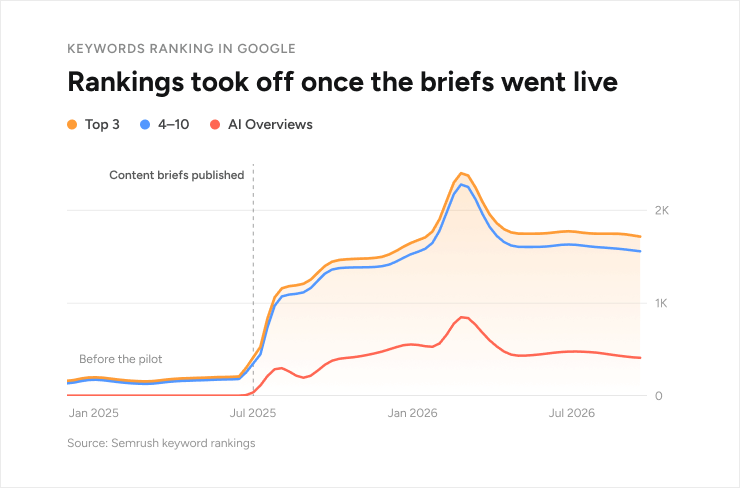
Our SEO pilot now drives half of a diagnostics site's search clicks.
49%
Share of Google search clicks from pages we optimized
4x
Growth in daily clicks to optimized pages
19,257
Google search clicks to optimized pages in 16 months
11
SEO content briefs delivered

Website Strategy · Messaging & Copywriting · Sitemap & IA · Wireframes · UX & Web Design · Iconography · Website Development
What You Get
What a life sciences website project includes
A standard project runs 12 to 16 weeks from kickoff to launch.

Audience mapping
Workshops and persona research covering sponsors, clinicians, lab teams, procurement and investors.

Information architecture
A sitemap that separates services, therapeutic areas, science and company pages, with a documented reason for each.

Visual design
Three homepage concepts from three designers, then responsive design at every breakpoint.

Development and CMS
A modular CMS with templates for services, publications, news and events, connected to your CRM.

Migration and SEO
A 55-point migration checklist, a redirect map and on-page SEO, so search traffic carries over.

Launch and support
Pre-launch audit, CMS training and 30 days of monitoring, with a retainer available afterward.
Want a life sciences website your scientists and your buyers both trust? Let's talk.
Results
Proof from healthcare and diagnostics
Search and conversion results from clients in clinical and diagnostic categories.
+92.98%
Non-branded organic traffic · Cytovale
+385.71%
Demo requests · Trella Health
+212.5%
Non-branded BOFU conversions · Freshpaint
+62.5%
Google Search clicks · Ideal CDPAP
Related
Related healthcare services
Here's what else we do for healthcare and life sciences companies.

Frequently Asked Questions
What are the best web design agencies for life sciences companies?
The best fit has built sites for companies like yours, whether that's a CRO, a diagnostics company or a tools provider, and can show how the site handles more than one audience. Our life sciences work includes Lexitas, an ophthalmology CRO, and Catalyst Clinical Research, a CRO with two specialist brands.
Is Takeoff a website development company that specializes in B2B life sciences and biotech brands?
Life sciences is part of our healthcare practice. We've designed and built sites for two CROs, Lexitas and Catalyst Clinical Research, whose buyers are biotech and pharma sponsors, and we've run SEO for a hospital diagnostics company. If you sell a scientific product or service to other organizations, the problems are ones we know.
What should a life sciences website include?
At minimum, it needs a clear statement of what you do, a path for each audience, pages for every service or therapeutic area, evidence like publications and data, and a simple way to start a conversation. Most life sciences sites have the evidence and bury it in PDFs. Putting it on indexable pages helps buyers and search engines find it.
How do you present complex scientific data on a website?
We lead with the plain-language version and let experts go deeper. That means a short summary first, then diagrams, then the full data on its own page. For Lexitas, scroll-triggered motion and a clean visual system made deep clinical content easy to scan.
What does a life science website design company do differently?
It designs for several readers at once. A sponsor, a clinical site, a lab director and an investor each arrive with a different question. A general agency tends to design for a single buyer. We map each audience in the strategy phase and give each one a route through the site.
Which CMS is best for a life sciences company?
It depends on your team. WordPress handles large resource libraries and complex content well. Webflow suits marketing teams that want to publish without developers. HubSpot makes sense if your CRM and marketing already live there. We work in all three and Drupal, and we'll recommend one based on how you publish.
How long does website development for a life science company take?
A standard project runs 12 to 16 weeks from kickoff. Strategy takes the first four weeks, structure and UX the next four, visual design follows, and development and training fill the last stretch. Medical, legal and regulatory review adds time, so we build those rounds into the plan from the start.
Can you help with SEO for scientific and technical keywords?
Yes. For a hospital diagnostics company, we built a keyword strategy and 11 content briefs around how clinicians, lab teams and hospital leadership each search. The client's team published the pages, and those pages now bring in about half of the site's search clicks.
How do you handle regulatory and medical review of website content?
We plan for it. Review rounds for medical, legal and regulatory teams go into the project schedule with named owners and dates. We also keep a source for every clinical claim, which makes those reviews faster.
What does life science website development cost?
It depends on site size, the number of audiences and templates, and how much content needs migrating. Every redesign includes strategy, design, development, SEO, content migration and CMS training. Request a quote and we'll scope it for you after a first call.